pelvic-health · training · buying-advice · 2 min read · Updated 2026-07-18
Kegel weights vs app-connected pelvic floor trainers: which actually helps?
The short answer
Both work — published research supports pelvic floor training with either tool, and consistency matters far more than the gadget. Simple kegel weights win on price (a full progressive set costs less than a month of some app subscriptions), zero batteries, zero data collection and zero learning curve. App-connected biofeedback trainers earn their keep in one specific case: if you genuinely cannot tell whether you are contracting the right muscles, real-time feedback on a screen is the clearest teacher outside a physiotherapist's office. Start with weights; upgrade to biofeedback only if feel alone isn't working.
General information, not medical advice — a pelvic health physiotherapist beats any product when symptoms are involved.
Search for pelvic floor training and you'll meet two very different price tags: a set of graduated silicone weights for the cost of a takeaway dinner, or a Bluetooth "smart trainer" with an app, a charging cable and sometimes a subscription. Here's the honest comparison.
What each one actually is
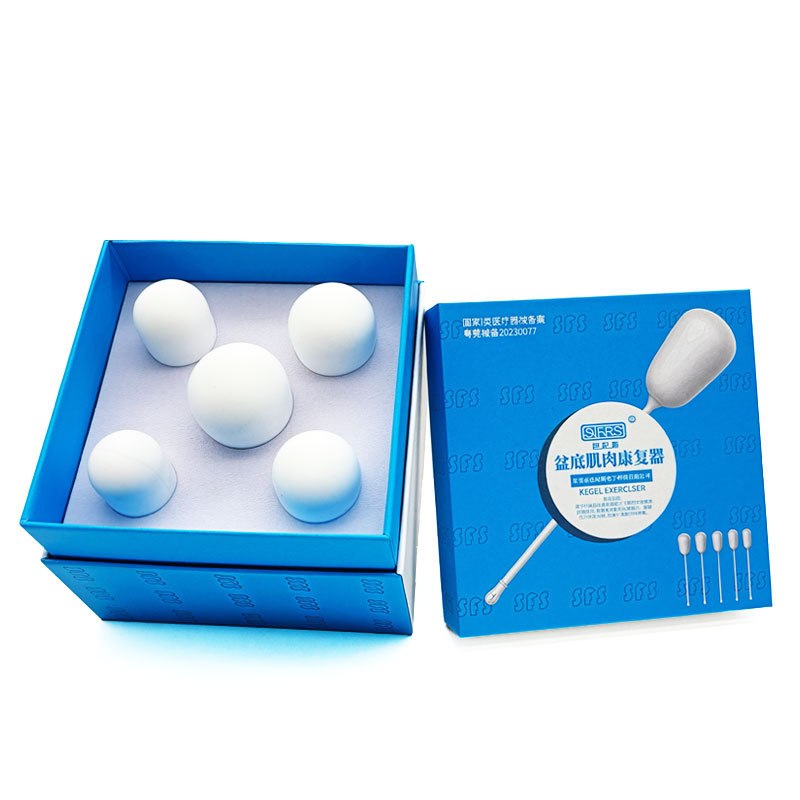
Kegel weights are exactly what they sound like: smooth, silicone-coated weights in graduated sizes (our Bloom set runs 27–70 g across five weights). The pelvic floor must engage to retain them — that engagement is the exercise, and the weight progression is the training programme. How to use them is a five-step routine.
App-connected trainers are pressure sensors in a silicone shell. They measure each contraction and stream it to your phone, where an app turns it into graphs, reps and often games. The exercise is the same contraction — what you're paying for is measurement and motivation.
The comparison that matters
| Kegel weights | App-connected trainer | |
|---|---|---|
| Typical cost | One-off, under A$50 | A$150–300, some with subscriptions |
| Evidence base | Strong (decades of physiotherapy use) | Strong for the exercise; the gamification layer is newer |
| Learning curve | Minutes | App pairing, calibration, charging |
| Batteries / charging | None | Yes — another device to charge |
| Privacy | No electronics, no data | Intimate-health telemetry tied to an account |
| Feedback | Physical (you feel retention or you don't) | Visual, real-time, on screen |
| Best for | Building a consistent, cheap, private routine | People who can't tell if they're contracting correctly |
The one case where the app genuinely wins
The most common failure mode in pelvic floor training is squeezing everything except the pelvic floor — glutes, thighs, breath-holding. A weight gives coarse feedback (it stays in or it doesn't); a biofeedback trainer shows the contraction on screen as it happens, which is the closest thing to a physiotherapist saying "yes, that one" outside a clinic. If you've tried weights for a few weeks and honestly cannot feel anything happening, that's the upgrade signal — or better, one assessment session with a pelvic health physio, which costs about the same as the gadget and diagnoses far more.
Our recommendation
Start simple: a graduated weight set (our kegel weights in Australia page covers what to look for and which weight to start with), the step-by-step routine, and a two-month commitment. It's the cheapest experiment, it's private by design, and the evidence says consistency — not technology — is what produces results at week eight. Keep the app option in reserve for the specific problem it solves.